

Looking ahead with hope.
A letter from Liz & Anthony Phillips
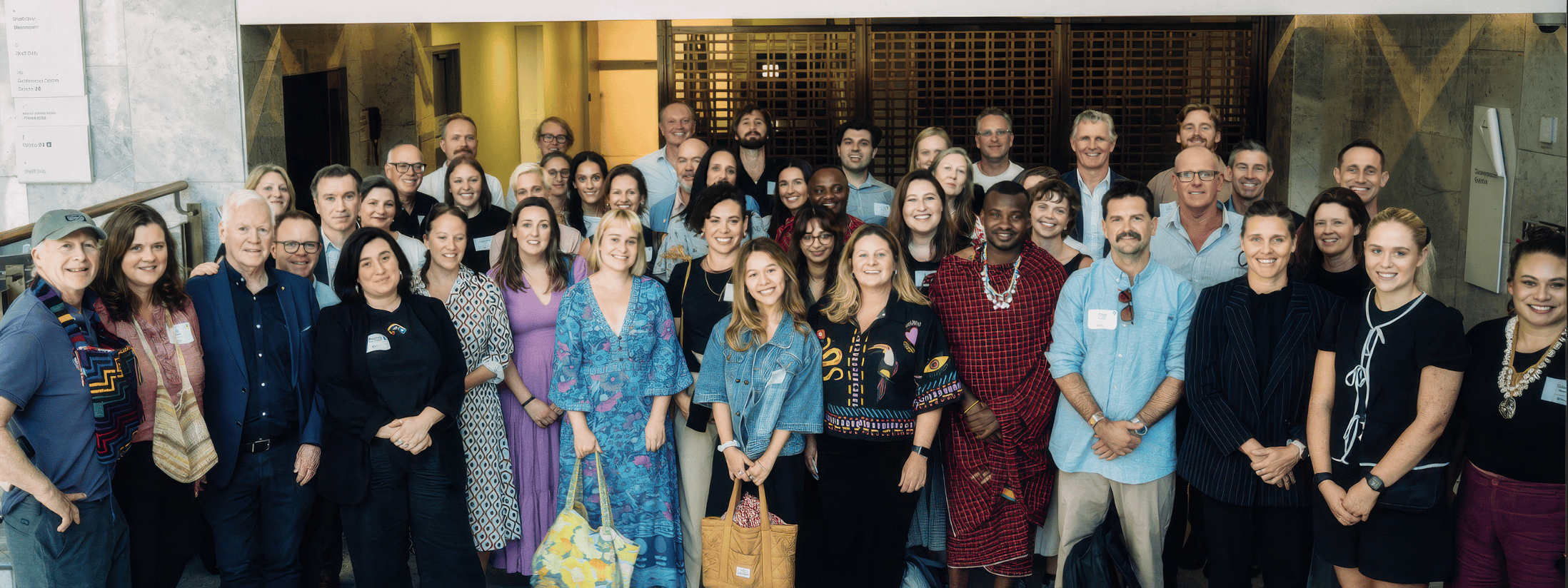
This year has been one of significant change across philanthropy and international development — shifting aid priorities, economic instability, and a growing recognition of the importance of locally led solutions. Throughout it all, what’s stayed constant is our belief that how philanthropy is practiced matters just as much as what is funded.
As The Phillips Foundation enters its second decade, we’re proud of what we’ve built alongside our partners: a track record of long-term relationships, collaborative learning, and meaningful impact across diverse communities and contexts. We remain optimistic about what can be achieved through careful listening, honest dialogue, and sustained commitment to young people.
Hope, wellbeing and participation continue to underpin everything we do. We look forward to continued friendships and a better year to come.
"Hope is the opposite of isolation.You build it through relationships, not through services alone."
— Sector leader, TPF Community of Practice
Founded in 2016, the Australia-based Phillips Foundation (TPF) is a values-driven philanthropic organisation focused on improving the lives of young people through education, wellbeing and participation. Since its establishment, TPF has partnered with more than 100 organisations across Australia, East Africa and Southeast Asia, supporting initiatives that address systemic barriers to opportunity and help young people build hope, resilience and agency.
Over time, TPF has developed a strong portfolio grounded in long-term partnerships, trust-based philanthropy and a belief that educational outcomes are deeply connected to wellbeing, belonging and access to opportunity.
As is hard to ignore, this year was one of significant global change. Across the international development and philanthropic sectors, shifting aid priorities, economic instability, climate pressures and growing recognition of locally led development continued to reshape the role philanthropy can play. As one foundation leader reflected during our conversations this year, “Aid collapse is a shock — but it’s also an opportunity to build local capacity and local intermediaries differently. Money, power, and norms are shifting hands. Philanthropy can — and should — do more.”
These broader shifts were echoed across many of the global forums and sector discussions TPF participated in throughout the year both those we convened through our Community of Practice, and those we attended, including the AVPN Global Conference, the World Drowning Prevention Conference, the Asia Philanthropy Circle Summit, and the Skoll World Forum. Across these gatherings conversations consistently centred on the importance of trust-based partnerships, flexible funding and solutions designed by communities themselves, rather than short-term or transactional approaches to giving.
While these ideas are nothing new, the sense of urgency — and the practical focus on how to action more ambitious, locally led and systems-oriented approaches — felt markedly stronger throughout the year.
Against this backdrop, in 2025-26 TPF undertook a review of our Access to Education portfolio to reflect upon what we have built in ten years, to consolidate learning and to consider how the Foundation can deepen its impact into the future. We are grateful to Becky Schutt and Lucy Phillips for their care in research and conversations, and to our partners for their candour and insights, which have enabled us to look backwards in order to plan forward
While the Foundation itself is nearing a decade of formal giving, the values underpinning its work extend much further back through the Phillips family ethos of generosity, coaching, teaching and contributing beyond oneself — often grounded not in abundance, but in the belief that acts of service and community responsibility matter regardless of circumstance.
No longer a new entrant in the philanthropic sector, we are proud that TPF has matured into a confident organisation with a strong track record of long-term partnerships, collaborative learning and meaningful impact across diverse communities and contexts. The Foundation has evolved beyond establishing programs and relationships to playing a more active role as a trusted partner, convener and contributor to broader conversations around youth wellbeing, education and systems change. We are indebted to our many colleagues and friends for continuing to push our thinking, including but certainly not limited to Ben Clark, Priyanka Willis, Becky Schutt, Susan Shaw & Tim Donohue.
While the global environment continues to evolve, TPF remains optimistic about what can be achieved through collaboration, careful learning processes and curiosity, and sustained commitment to young people. At the centre of the Foundation’s approach is a belief that how philanthropy is practiced matters just as much as what is funded.
We were encouraged throughout the year to hear our partners consistently reinforce the importance of long-term relationships, convening, honest dialogue and funding models that create space for learning, adaptation and ambition. TPF’s approach has always been grounded in partnership — working alongside organisations with humility and a willingness to listen deeply. As one partner reflected during the review process, “The Foundation is approachable, they are real, they’re determined, and they want to leave a legacy. They want to make a difference.”
We deeply cherish this feedback, which reinforces the values and ways of working that we will never cease prioritising as we evolve. TPF believes that effective philanthropy is not about having all the answers, but about asking thoughtful questions, building trust over time and supporting the people closest to the work. Partners repeatedly described the Foundation’s approach as grounded, human and coaching-oriented: “They didn’t come in telling us what to do — they came in asking good questions.”
The Foundation is equally committed to creating spaces where learning can happen collectively. Through our tailored communities of practice, learning events and informal connectivity across the portfolio, TPF seeks to strengthen relationships, reduce competition and encourage more open sharing across the sector. As one participant observed, these spaces create an environment where “all the competition dies” and more authentic conversations can emerge.
Underpinning all of this is a continued belief that hope, wellbeing and participation are fundamental to long-term change. Hope is not viewed as passive optimism, but as something built through relationships, opportunity, dignity and belonging. As one sector leader shared during the review process, “Hope is the opposite of isolation. It’s contagious. You build it through relationships, not through services alone.”
As TPF enters its second decade, the Foundation remains committed to continuing this work thoughtfully and ambitiously — listening carefully, learning openly and working alongside communities to help create the conditions in which more young people can flourish, contribute and imagine positive futures for themselves and those around them.
We look forward to continued friendships and a better year to come.
Last year, after 16 years of support, School for Life celebrated its first cohort of secondary graduates. While they await their next steps, these young changemakers are giving back and becoming community leaders. They are volunteering in local underserved schools leading projects to improve student learning outcomes and uplifting school communities.”
Amy Priestly
School for Life – Uganda
Access to Education Portfolio
Partnership & Investment Strategy
We invest in locally led solutions that create change.
The Phillips Foundation has three investment programs aligned with our founders’ philanthropic intentions.
Discovery Grants
are 12-month partnerships that test ideas, respond to immediate community needs and symptoms, and generate insights to inform future investment.
Strategic Grants
support multi-year partnerships that address the root causes of complex challenges, strengthen organisations, and deliver measurable outcomes.
Venture Grants
bring partners together to tackle shared challenges at scale, creating skills and solutions that drive lasting systems change.
Where we invest.
Through our funding partners, The Phillips Foundation has achieved significant impact globally. We are currently investing in programs and services delivered in the following countries:
This photo captures how we have begun to better understand impact by bringing together schools and communities to hear and share stories. It shows students, teachers, principals, government representatives, community leaders, and our local NGO partner reflecting on changes resulting from Classroom of Hope programs. Using an adapted Most Significant Change methodology, stories were gathered from people connected to our work in different ways, offering diverse perspectives on impact. This process has provided some of the most powerful insights into how people felt before, during, and after Classroom of Hope arrived — and how a new school can have healing effects across an entire community.”
Tanya Armstrong
Classroom of Hope
Transforming Education in Lombok
Our Investment
Our five portfolios and the organisations we support.
TPF’s longstanding Access to Education portfolio spans nine partners across Africa, Southeast Asia, and First Nations Australia, with an average annual grant size of $116,000. Together, these organisations advance a holistic, systems-based approach to education that extends beyond the classroom, addressing wellbeing, safety, gender equity, and access to essential resources in contexts shaped by under-resourced education systems and structural inequality.
Across the portfolio, strong community ownership, evidence-informed practice, and integrated theories of change are helping to build not only educational outcomes, but also long-term opportunity, agency, and resilience. Our analysis indicates that the strongest gains in youth wellbeing—particularly hope for the future—occur where programs simultaneously invest in relationships, basic needs, and pathways to opportunity.
The portfolio is distinguished by collaborative, community-led models and increasingly sophisticated measurement practices. While challenges remain in aligning approaches across diverse contexts, partners continue to demonstrate the value of locally led solutions in creating lasting change for young people.
Key Funding Streams





The Healthy and Active Lifestyles funding strategy embeds holistic support, community input, and systemic reform into youth sport programmes across Australia, complementing Phillips Coaching’s focus on mind, body, and craft. In FY26, the first year of this strategy, TPF formalised a number of Discovery and Strategic partnerships.
Discovery Partners helped address immediate challenges such as limited access to quality coaching, financial barriers, and disrupted development pathways.
Strategic Partners, already supported by TPF, will continue to address root causes like inequitable resource distribution, fragmented support systems, and underused community assets.
Key Funding Streams

Living Ripples is TPF’s flagship wellbeing initiative, empowering schools and communities to build the conditions for children and young people to thrive.
Through a proven three-year process, schools gather and interpret wellbeing data from students, staff, parents, and carers, translating insights into evidence-based action plans tailored to their unique context. Supported by expert facilitators, practical resources, and a growing community of practice, schools are equipped to embed wellbeing into everyday culture and decision-making.
Now in its sixth year, Living Ripples continues to expand its impact, helping schools move beyond measuring wellbeing to creating meaningful, sustained change. The program is strengthening its evidence base, deepening community partnerships, and exploring pathways for long-term sustainability through philanthropy, government, and industry collaboration.
The long-term vision is simple: to enable schools and communities to confidently lead their own wellbeing journeys, share what works, and create environments where every child and young person can realise their full potential.
Focus of Investment
Drowning claims around 300,000 lives each year, with the greatest burden falling on children and young people in low- and middle-income countries. Yet most drowning deaths are preventable.
Established this year, TPF’s Swim Skills for Life (SSL) portfolio brings together 18 organisations across four continents to build water confidence, swimming skills, and safer communities. Children and young people in these communities often face barriers such as cost, fear, shame, trauma, and limited access to instruction that prevent them from learning essential water safety skills.
In its first year, the initiative has focused on building a global learning network of organisations and experts, creating opportunities for knowledge sharing, innovation, and advocacy. Through the SSL Co-Lab, partners are strengthening practice, addressing local barriers to participation, and advancing a shared vision that water safety should be a universal right.
Together, we are also supporting the pioneering Float to Survive organisation to co-develop and champion a Global Drowning Prevention Day on 27 February 2027—a world-first international awareness initiative focused on participation, education, and community engagement
Key Funding Streams



Following the devastating 2018 earthquakes that struck Lombok, Indonesia, TPF began investing in the region to support long-term recovery and resilience. Since then the Foundation has worked alongside local communities to address two interconnected challenges: access to quality education and environmental sustainability.After several years of discovery and strategic partnerships, TPF established Lombok as a dedicated venture portfolio in FY25. The initiative is led by Classroom of Hope, which convenes a coalition of local organisations and businesses, including Good Neighbours Indonesia, Happy Hearts Indonesia, and Block Solutions Indonesia. Importantly, 85 cents of every dollar invested remains within the Lombok economy, strengthening local capacity and ownership.
At the heart of the approach is the construction of EcoBlock classrooms, transforming plastic waste into safe, disaster-resilient learning environments. TPF’s Measurement, Monitoring and Learning framework has shown that these schools improve students’ resilience, hope, life satisfaction, connection to nature, and sense of safety.
FY26 presents a significant opportunity to scale impact through partnerships with regional philanthropy, the Lombok District Government, and international development agencies. These collaborations will help create a sustainable funding pathway beyond TPF’s investment while validating Lombok’s model as an innovative approach to rebuilding communities, improving educational outcomes, and reducing environmental waste.
The long-term ambition is to establish Lombok as an “Island of Excellence” — a proven model for post-disaster recovery that can be adapted and replicated in communities around the world.
Key Funding Streams

At The Cova Project, advocating for gender equity and equal opportunity is what we do. But in the current climate, there has been a significant societal step back in that shared mission. My image of hope is of the five men (Kymbal Dunne, Craig Blair, Simon Price, Des Mulcahy and Anthony Phillips) who stood up and spoke about the importance of menstrual health and ending period poverty at our recent event. Watching this force of influential dads fearlessly call others to action gave me immense hope.”
Geena Dunne
The Cova Project – Liberia, Uganda, Ghana, Malawi
Access to Education Portfolio
Impact & Evidence
Measuring what matters most.
In FY26, our partners surveyed nearly 45,000 children and young people across Australia, East Africa and South East Asia.
The survey uses two internationally validated measures — the Children’s Hope Scale and the Cantril Ladder of Life Satisfaction — to better understand young people’s levels of hope, life satisfaction and resilience.
Together, these measures help explore not only how young people feel about their current lives, but also their sense of agency, future orientation and ability to navigate challenges over time.
Importantly, the survey is designed not as a tool for comparison between organisations, but as a learning framework to better understand the conditions that support young people to thrive. Findings are interpreted within the broader social, cultural and economic contexts in which young people live, recognising that wellbeing outcomes are shaped by far more than individual circumstance alone.
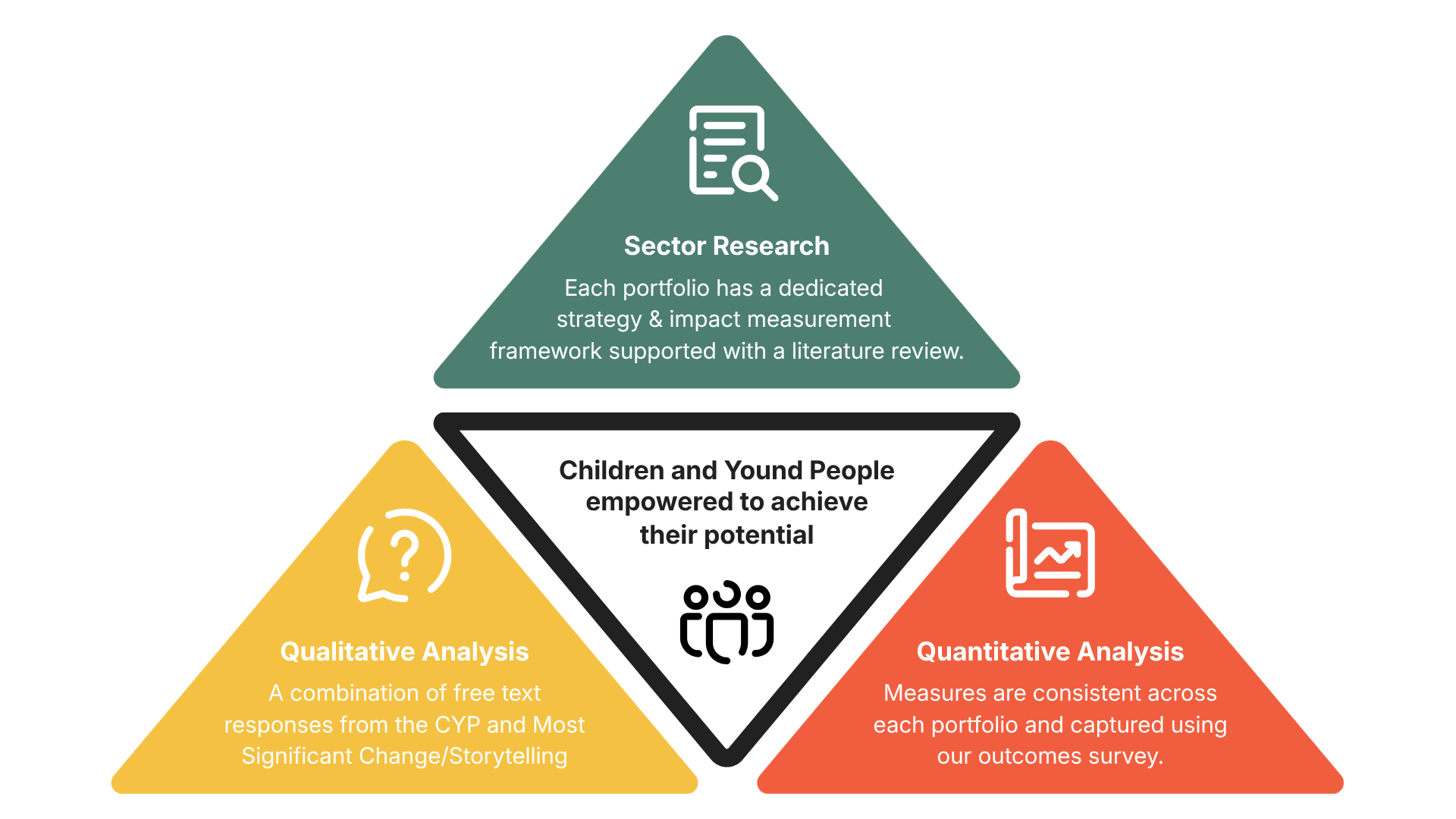
TPF’s Measurement Methodology: A mixed methods approach is applied, triangulating data from leading sector research, individual partner impact reports and quantiative and qualitative insights from children and young people participating in the Outcomes Survey.
Pictured here is an image of hope for me – Our Ambassadors of Hope. These are our secondary students in rural Kenya becoming agents of change in their communities. If a girl finishes secondary school she changes from commercial property to an autonomous human being.”
Moureen
So They Can – Baringo, Kenya
Access to Education Portfolio
Sustainable Development Goals
Advancing the Global Goals.




Urapunga is a tiny remote community in the Northern Territory. The primary school is less than 20 students. Their very dedicated principal had worked with us (YNT) to coordinate swimming lessons for his students, including lots of work to find a bus to take the students to the pool (about a 30min drive). On the morning of their first lesson, the bus broke down, leaving the students with no option to get to the pool… Not letting their students miss out, the whole community rallied a convoy of eight cars that drove the students to the pool. The joy!”
Serena Davies
Y Northern Territory – Australia
Swim Skills for Life Portfolio
Community of Practice
Our Community of Practice
The Phillips Foundation co-curates a series of learning sessions throughout the year with our Partners – to build connections, share our challenges, and strengthen our collective impact.
of partners reported a sense of kinship through our Community of Practice across four continents
have identified new opportunities for collaboration with other TPF Partners
What an absolute pleasure it was having Ian Lee and Bruce “Hoppo” Hopkins of Float to Survive support our team in Cambodia with floating. With an open wound, we were concerned that Davy*, pictured here, could not participate. Davy is the sister of Piseth, a young boy who had drowned in the canal two years before. Having waited patiently, but desperately wanting to participate, Ian was able to share some larger bandages and betadine so that she could join the following day. She was also accompanied by the sister of Vannak, a young boy who had drowned the year after Piseth. Although his younger brother had been too young to join in the lessons, he had watched with his grandmother each week. With some convincing, he was brave enough to try with some aids and gentle support. Words cannot express what this means to our community.”
*names changed to protect their identities
Patrice Davison
Children’s Future International – Cambodia
Swim Skills for Life Portfolio
Our partners
The organisations we work alongside.
| Partner | Portfolio area | Investment year |
|---|---|---|
| Andy Donaldson | Swim Skills for Life | 2025 |
| Aquatics and Recreation Victoria | Swim Skills for Life | 2025 |
| Barwon Sports Academy | Healthy and Active Lifestyles | 2025 |
| Cambodian Children's Trust | Swim Skills for Life | 2025 |
| Charity Bounce | Healthy and Active Lifestyles | 2025 |
| Child's Dream Foundation | Access to Education | 2029 |
| Classroom of Hope | Access to Education | 2019 |
| Creative Education Foundation Zanzibar | Swim Skills for Life | 2025 |
| Cricket Victoria Foundation | Healthy and Active Lifestyles | 2025 |
| Deaf Children Australia | Swim Skills for Life | 2024 |
| Ganbina | Achieving Personal Potential | 2019 |
| International Fund for Animal Welfare | Access to Education | 2020 |
| Lifeline Central West | Living Ripples | 2025 |
| MacKillop Family Services | Swim Skills for Life | 2025 |
| Magic Bus India Foundation | Access to Education | 2025 |
| Manta Trust | Swim Skills for Life | 2025 |
| Mulan Aboriginal Corporation | Swim Skills for Life | 2025 |
| One Ball | Healthy and Active Lifestyles | 2023 |
| Orkeeswa | Access to Education | 2022 |
| Reclink | Healthy and Active Lifestyles | 2017 |
| Saltbush Balnarring | Swim Skills for Life | 2025 |
| School For Life | Access to Education | 2021 |
| So They Can | Access to Education | 2018 |
| Sport and Life Training | Healthy and Active Lifestyles | 2018 |
| Surf Educators International | Swim Skills for Life | 2025 |
| The Cova Project | Access to Education | 2023 |
| The Sports Excellence Scholarship Foundation | Healthy and Active Lifestyles | 2019 |
| Wathaurong Aboriginal Co-operative | Swim Skills for Life | 2025 |
| Y-NT (Youth Parliament) | Access to Education | 2023 |
| Yellow Dove | Swim Skills for Life | 2025 |